

Installing a ceiling fan in Mansfield, TX, can be a straightforward task if you follow the right steps. You’ll want to guarantee you have the proper tools and take safety precautions seriously. By starting with the correct setup and following a methodical approach, you can avoid common pitfalls. So, what’s the first thing you need to do before you even think about mounting that fan? Let’s find out.
Gather Necessary Tools and Materials
Before you begin your ceiling fan installation, gather the necessary tools and materials to guarantee a smooth process.
You’ll need a ladder, a screwdriver, pliers, wire connectors, and a voltage tester. Having a stud finder can also be helpful to locate the ceiling joists.
Make sure to grab your ceiling fan kit, which should include the fan blades, mounting bracket, and any additional hardware.
If your fan has a remote control, check for batteries too. A measuring tape can assist in determining the fan’s height and placement for ideal airflow.
Don’t forget a flashlight to illuminate your workspace if needed.
Lastly, consider having a friend assist you, as an extra set of hands can make the installation easier and safer. A professional installation service can also ensure that your ceiling fan is set up correctly and safely.
With everything ready, you’ll be well-prepared to tackle your ceiling fan installation like a pro!
Turn Off Power at the Circuit Breaker
Before you start installing your ceiling fan, you need to guarantee safety by turning off the power at the circuit breaker.
First, locate your circuit breaker panel and switch off the breaker that controls the ceiling fan’s power.
Once that’s done, use a tester to confirm that the power is off before you proceed. It’s crucial to ensure that there are no signs of electrical issues before beginning your installation to prevent any hazards.
Locate Circuit Breaker Panel
Finding your circuit breaker panel is essential for safely turning off the power before starting your ceiling fan installation. Typically, you’ll find the panel in a basement, garage, or utility room. If you’re unsure where it is, look for a metal box that houses a number of switches.
Here are some tips to help you locate it:
- Check your home’s blueprints or ask the previous owner if available.
- Look for a door leading to a utility area; the panel is often mounted on the wall.
- Listen for any humming sounds, which might indicate nearby electrical equipment.
Once you locate the circuit breaker panel, you’re one step closer to ensuring a safe installation process!
Switch Off Relevant Breaker
Once you’ve located your circuit breaker panel, it’s essential to switch off the relevant breaker to guarantee your safety during the installation.
Identify the breaker that controls the power supply to the room where you’ll install the ceiling fan. Usually, it’s labeled, but if not, you may need to turn off a few breakers until the power is cut.
Flip the switch to the OFF position firmly. This simple action prevents any electrical mishaps while you’re working.
Additionally, it’s a good idea to inform anyone in your household that you’re working on the electrical system, ensuring they don’t accidentally turn the power back on.
With the breaker off, you’re ready to proceed safely with your ceiling fan installation.
Test Power With Tester
With the breaker switched off, it’s time to verify that there’s no power running to the wires you’ll be working with.
Grab your voltage tester and double-check the wires to confirm safety before you start the installation.
- Touch the tester’s probes to the exposed wire ends.
- Look for a light indicator or listen for a beep, confirming no current.
- Don’t skip this step; it’s essential for your safety!
If the tester shows any power, return to the breaker and make sure it’s fully switched off.
Once you’re certain there’s no electricity flowing, you can proceed with confidence.
Safety first makes the installation process much smoother and worry-free.
Choose the Right Location for Installation
Choosing the right location for your ceiling fan installation is crucial for maximizing airflow and comfort in your space. Start by selecting a central spot in the room, ideally where the fan can effectively circulate air. Confirm the fan is at least seven feet above the floor for safety and peak performance.
Avoid positioning it too close to walls or large furniture, as this can obstruct airflow. Consider the room’s layout and activities; for example, in a living room, place it over a seating area.
If you have high ceilings, you may need a downrod to lower the fan to a better height. Finally, think about the aesthetic; verify that the fan complements your room’s decor. Additionally, ensure that smoke detectors are properly installed in the space to enhance home safety while enjoying the comfort of your ceiling fan.
Remove the Existing Light Fixture
After you’ve selected the ideal spot for your ceiling fan, it’s time to remove the existing light fixture to make way for your new installation.
Start by turning off the power at the circuit breaker to guarantee your safety while you work. Once the power’s off, use a step ladder to reach the fixture. Carefully remove the lightbulbs and any shades or covers.
Next, detach the fixture from the ceiling by unscrewing it from the mounting bracket. You’ll find wires connected to the fixture—make sure to note how they’re connected before disconnecting them.
Here’s a quick checklist for removing the light fixture:
- Turn off the power at the circuit breaker.
- Use a step ladder for safe access.
- Take note of wire connections before detaching.
It’s also wise to consider installing a whole-home surge protector to safeguard your new ceiling fan from potential electrical damage.
With the light fixture removed, you’re one step closer to your new ceiling fan installation!
Install the Ceiling Fan Mounting Bracket
To securely hang your ceiling fan, start by installing the mounting bracket. First, locate the ceiling fan’s mounting bracket, which typically comes with the fan. Align it with the electrical box, making sure it sits flush against the ceiling. Use a level to confirm it’s straight, then mark the screw holes with a pencil.
Next, drill pilot holes into the ceiling if necessary. Secure the bracket using the provided screws, making certain they’re tightened adequately to support the fan’s weight. Double-check that everything’s stable and properly aligned before moving forward.
If your fan has a canopy, confirm it fits over the bracket comfortably. This is essential for both aesthetics and safety.
Once the bracket’s in place, you’re one step closer to enjoying your new ceiling fan. Remember, a secure installation is key to avoiding any future issues.
Connect the Wiring Correctly
Now that you’ve got your mounting bracket in place, it’s time to connect the wiring correctly.
Start by identifying the wire colors—this guarantees you match them properly for safe connections.
Once you’ve sorted that out, secure the connections to prevent any issues down the line.
Identify Wire Colors
Understanding wire colors is essential for connecting your ceiling fan safely and effectively. When you look at the wires, you’ll notice specific colors that play different roles in the circuit.
Familiarizing yourself with these colors helps guarantee that you make the right connections.
- Black or Red Wires: These are usually the hot wires, carrying the electrical current.
- White Wires: Often referred to as neutral wires, they complete the circuit by returning current.
- Green or Bare Wires: These are ground wires, providing safety by directing excess electricity away.
Secure Connections Properly
Securing connections properly is essential for a safe and functional ceiling fan installation. Start by twisting the corresponding wires together—black to black, white to white, and green or bare to the ground wire.
Use wire nuts to cover each connection securely, ensuring no exposed wire is visible. If you’re using push-in connectors, make sure they’re firmly inserted.
Once you’ve connected the wires, gently push them back into the ceiling box, avoiding any pinching. It’s vital to double-check that all connections are tight and secure before you mount the fan. This will prevent any electrical shorts or malfunctions.
Finally, if you’re unsure about any step, don’t hesitate to call professionals like Cool Hand Electric for assistance.
Assemble the Ceiling Fan Components
Before you start the installation, it’s important to gather and assemble all the ceiling fan components to guarantee a smooth process. This preparation helps you avoid unnecessary interruptions and confusion during the installation.
Here’s a quick list of the essential components you’ll need:
- Fan blades: Verify they’re free of damage and ready to attach.
- Motor assembly: This is the heart of your ceiling fan, so check it for any defects.
- Mounting hardware: Gather screws, brackets, and any other necessary tools.
Once you have everything laid out, take a moment to double-check that you’ve got all the parts. This attention to detail will save you time and frustration later.
Also, make sure you have the right tools on hand, like a screwdriver and a ladder. With everything ready, you’re set to move on to the next steps of your ceiling fan installation!
Attach the Fan to the Mounting Bracket
Now that you’ve assembled the ceiling fan components, it’s time to attach the fan to the mounting bracket.
First, make sure you select a suitable mounting bracket for your fan.
Then, securely attach the fan assembly and double-check your wiring connections for safety.
Select a Suitable Mounting Bracket
When selecting a suitable mounting bracket for your ceiling fan, you’ll want to confirm it matches the fan’s weight and design specifications. This guarantees the fan is securely held in place and functions properly.
Consider these key points while making your choice:
- Weight Capacity: Check the bracket’s weight limit to support your fan.
- Design Compatibility: Verify the bracket fits the style and size of your fan.
- Installation Type: Choose between a flush mount or downrod mount depending on your ceiling height.
Taking the time to find the right mounting bracket not only enhances the longevity of your fan but also assures safety and peak performance.
Don’t rush this step—it’s vital for a successful installation!
Securely Attach Fan Assembly
With the mounting bracket securely in place, it’s time to attach the fan assembly.
Start by lifting the fan motor and aligning it with the bracket. You’ll usually find a hook or a set of screws that will hold the fan in position. If your fan has a safety cable, make sure to secure it to the bracket as well.
Once aligned, gently slide the fan onto the bracket or insert the screws, depending on your model. Tighten the screws to guarantee the fan is stable and won’t wobble during operation.
Double-check that everything is secure before moving on to the next steps. This setup guarantees your fan is safely mounted and ready for use.
Check Wiring Connections
Before securing the fan assembly to the mounting bracket, it’s essential to check the wiring connections to verify everything is properly configured. This step guarantees that your ceiling fan operates safely and efficiently.
Start by turning off the power at the circuit breaker to avoid any electrical mishaps. Once it’s safe, inspect the connections for correctness and tightness.
- Confirm the fan’s black wire connects to the black household wire.
- Verify the white wire is securely attached to the white household wire.
- Check that the ground wire is properly connected to the grounding screw.
Secure Blades and Light Kit
As you prepare to secure the blades and light kit of your ceiling fan, confirm you’ve gathered all necessary tools for a smooth installation. You’ll need a screwdriver, safety goggles, and possibly a step ladder.
Begin by attaching the blades to the motor assembly; align them with the pre-drilled holes and use the screws provided. Tighten each screw securely, but be careful not to overtighten, as this could damage the blades.
Next, move on to the light kit. Follow the manufacturer’s instructions to connect the wiring, making sure each connection is tight and secure.
Once connected, carefully attach the light kit to the fan base, ensuring it’s flush and aligned correctly. Again, use the screws included in the kit to fix it in place.
Double-check everything to verify it’s secure before moving on. A solid installation now will save you trouble later!
Restore Power and Test the Fan
Now that you’ve secured the blades and light kit, it’s vital to restore power to the fan and test its functionality.
Begin by turning the circuit breaker back on. This step’s important; without power, you can’t confirm that everything’s working properly.
Once the power’s restored, flip the wall switch and observe your fan’s operation.
- Check if the blades spin smoothly without wobbling.
- Test the light kit to verify it illuminates as expected.
- Cycle through the fan’s speed settings to confirm all functions work.
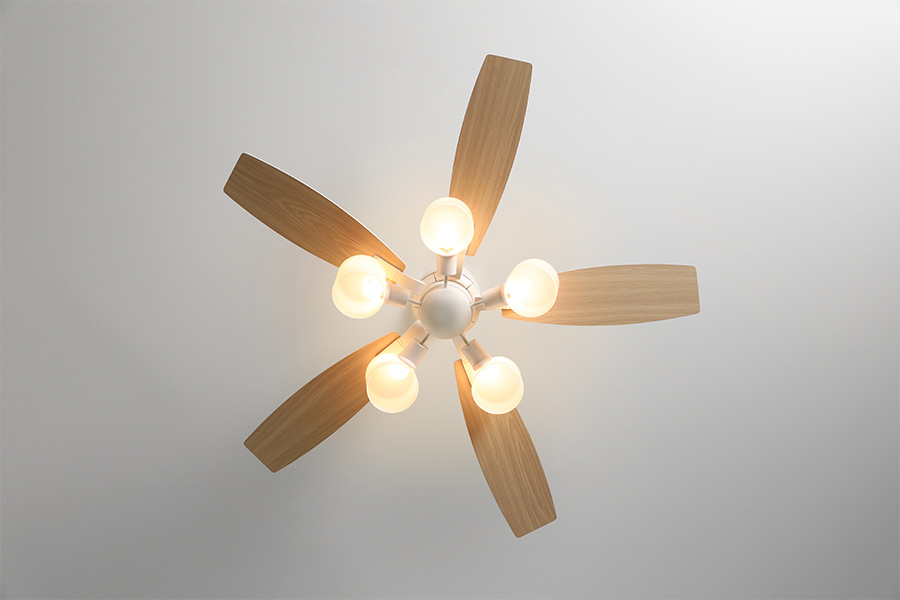
If everything’s functioning correctly, you’ve successfully installed your ceiling fan!
However, if you notice any issues, it may be a good idea to double-check your wiring connections or contact a professional.
Conclusion
Now that you’ve safely installed your ceiling fan, enjoy the revitalizing breeze it brings while knowing you took the right precautions. The difference between a sweltering room and a cool, comfortable space lies in your hands. By following these steps, you’ve transformed a simple task into a rewarding accomplishment. So, sit back, relax, and let your new fan elevate your comfort while you appreciate the safety measures that made it all possible.