Fort Worth, TX, homes face a unique combination of factors that make surge protection more than just a precaution. Powerful spring thunderstorms rolling through Tarrant County, aging infrastructure in established neighborhoods across the city, and the growing number of smart devices and high-draw appliances in modern households all create conditions where unprotected electrical systems are genuinely at risk. As a licensed electrician in Fort Worth, TX, our team regularly assesses homes where power surges have already caused damage that could have been prevented. Knowing the warning signs early gives homeowners the opportunity to act before that damage occurs.
Signs of Frequent Power Surges in Your Home
Power surges don’t always announce themselves dramatically. In many cases, they appear as recurring minor annoyances that homeowners chalk up to quirks of an older home. The problem is that even small, repeated surges cause cumulative damage to electronics and appliances over time.
In our service calls throughout Fort Worth, the most consistent indicators of ongoing surge activity include:
- Flickering or dimming lights: Lights that fluctuate in brightness, especially when appliances cycle on, suggest voltage instability on the circuit
- Unexpected device resets: Electronics that reboot or lose settings without explanation often absorb surge energy through their internal components
- Frequent breaker trips: A breaker tripping more than occasionally under normal household use points to load and voltage issues that need professional attention
- Burnt or discolored outlets: Discoloration around an outlet face is a direct sign of heat damage caused by repeated electrical spikes
- Appliances failing ahead of schedule: Equipment that wears out significantly earlier than its expected lifespan is often a victim of sustained surge exposure
Any one of these signs warrants a conversation with a licensed electrician. Several of them together make whole-house surge protector installation an urgent priority.
The Impact of Electrical Surges on Appliances
Damage to appliances is rarely dramatic or visible. More often, it accumulates quietly within sensitive components until a device fails, malfunctions, or simply stops performing as it should.
A refrigerator struggling to hold temperature, a washer running rough cycles, a microwave taking longer than it should, a television that flickers before settling: these are all common symptoms of a home absorbing regular surge activity without protection. The internal control boards and sensors in modern appliances are particularly vulnerable because they operate on low-voltage circuits that are not designed to absorb excess energy.
Working in homes across Fort Worth, we regularly see the cost of this damage. Replacing a smart appliance or a home entertainment system is expensive. Replacing several of them in a few years because the electrical system wasn’t protected is a cost that a properly installed surge protector would have prevented entirely.
Why Does Your Home’s Age Matter for Surge Protection?
The age of a home is one of the most reliable predictors of surge vulnerability. Homes built in Fort Worth’s older residential areas, including neighborhoods in the Near Southside, Fairmount, and Polytechnic Heights districts, were wired to meet the standards of their era. Those standards did not anticipate the electrical demands of a household running smart thermostats, EV chargers, multiple computers, and high-efficiency HVAC systems simultaneously.
Several age-related factors increase surge risk:
- Older wiring systems: Wiring materials and insulation from decades past degrade over time. Degraded insulation reduces the wire’s ability to handle voltage spikes safely, increasing the risk of shorts, overheating, and fire
- Outdated electrical standards: Older panels and wiring configurations may lack adequate grounding, which is one of the primary mechanisms through which surge energy is safely redirected away from appliances
- Increased appliance sensitivity: Older homes weren’t designed for the microprocessor-driven, sensitive appliances now standard. The more electronics a home contains, the more exposure it has to surge damage without proper protection
An honest assessment of your home’s wiring and panel condition is the starting point for understanding what level of surge protection your specific situation requires.
Increased Usage of Smart Devices and Electronics
The number of connected devices in the average Fort Worth home has grown substantially over the past decade. Smart speakers, security systems, video doorbells, thermostats, gaming consoles, streaming devices, and home office equipment all require stable, clean power to function reliably and have a normal lifespan.
Each of these devices is sensitive to voltage fluctuations. A surge that a traditional incandescent light bulb would have shrugged off can permanently damage a smart home hub or a laptop’s motherboard. When a home is running dozens of connected devices across multiple rooms, the potential cost of a single unprotected surge event is significant.
A whole-house surge protector installed at the main panel intercepts excess voltage before it reaches any device in the home. Individual plug-in surge strips offer limited protection at specific outlets but leave the rest of the home’s circuits unguarded. Whole-house protection is the only approach that covers every connected device comprehensively.
Unusual Flickering or Dimming of Lights
Flickering or dimming lights are among the most visible and most frequently dismissed signs of an electrical system under stress. Homeowners often assume the issue is isolated to a bulb, a fixture, or a specific switch, but the pattern usually tells a broader story.
When the lights dim as large appliances start up, that voltage drop occurs across the panel. When lights flicker without any appliance cycling on, the source may be external, such as utility switching, neighborhood load changes, or incoming grid surges. In either case, the lights are serving as an indicator of voltage instability that every other device in the home is also experiencing, just without the visible feedback.
Ignoring persistent flickering is not a neutral choice. The underlying conditions that cause it continue to stress your home’s wiring and connected equipment until the root issue is addressed.
Understanding the Risks of Outdated Wiring
Outdated wiring introduces risk on multiple levels. The hazards go beyond surge vulnerability and include fire risk, appliance damage, and incompatibility with modern electrical loads.
Key concerns with aging wiring systems include:
- Degraded insulation: Older insulation materials become brittle and can crack, creating exposed conductors that generate heat and present fire and shock hazards
- Insufficient grounding: Systems without proper grounding cannot redirect surge energy safely, leaving every connected device exposed
- Incompatibility with modern loads: Older wiring wasn’t sized for the amperage that modern appliances require, which leads to overheating at connection points and in the walls
- Frequent blown fuses or tripped breakers: These aren’t just inconveniences. They are the system’s warning that it is being asked to carry more than it can safely handle
- Appliances overheating or shutting down unexpectedly: Equipment that cycles off on its own or runs unusually hot is often reacting to inconsistent power delivery from an aging system
An electrical panel repair or replacement may be necessary, along with surge protection installation, if the wiring and panel are found to be inadequate during a professional inspection.
How Can Whole-House Surge Protectors Help?
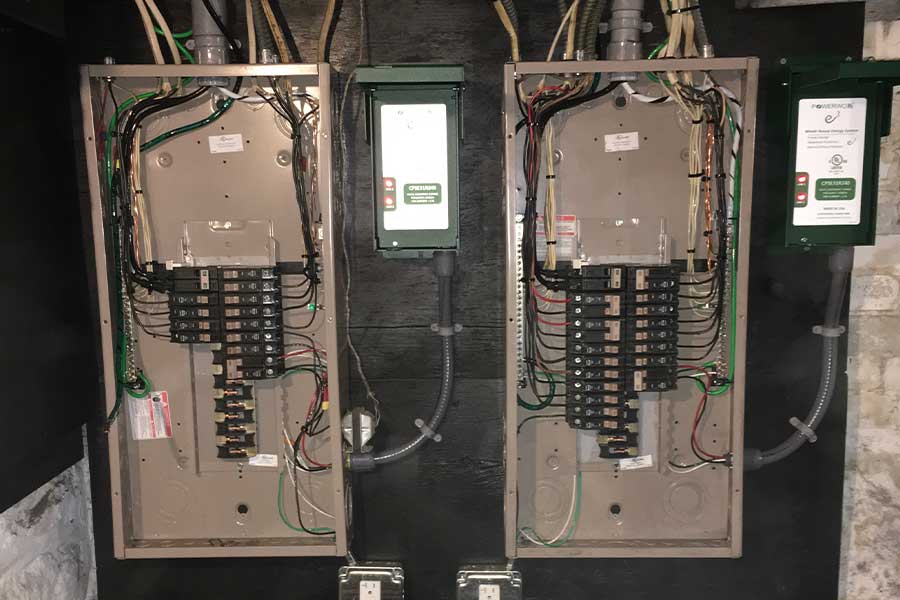
A whole-house surge protector is installed directly at the main electrical panel, continuously monitoring incoming voltage. When a surge event occurs, whether from a lightning strike, a utility grid fluctuation, or a large motor cycling on inside the home, the protector diverts the excess voltage safely to ground before it travels through the home’s circuits.
This protection works in real time and covers every outlet, circuit, and connected device in the home simultaneously. Unlike plug-in strips, which protect only the devices plugged directly into them and degrade in effectiveness after absorbing surges, a whole-house unit operates at the infrastructure level, providing consistent, comprehensive coverage.
For Fort Worth homeowners with significant investments in appliances, electronics, and smart home systems, the cost of whole-house surge protection is a fraction of what a single unprotected surge event can cost in damaged equipment.
Surging Ahead Safely in Fort Worth, the Cool Hand Electric Way
Surge protection is one of those investments that homeowners rarely think about until something expensive stops working. At Cool Hand Electric, Heating, & AC Repair, we’ve been helping Fort Worth and surrounding area homeowners protect their homes and equipment since 2015, and we consistently find that whole-house surge protection is one of the most cost-effective upgrades a homeowner can make. If your home is showing any of the signs covered here, schedule your service today and let our team assess your system and recommend the right solution for your home.